
Why Is the Grain Deal Vital for Egypt's Bread Subsidies?
Unpacking the logistical lifeline connecting Black Sea shipping lanes to the survival of Cairo’s state-subsidized bread program.

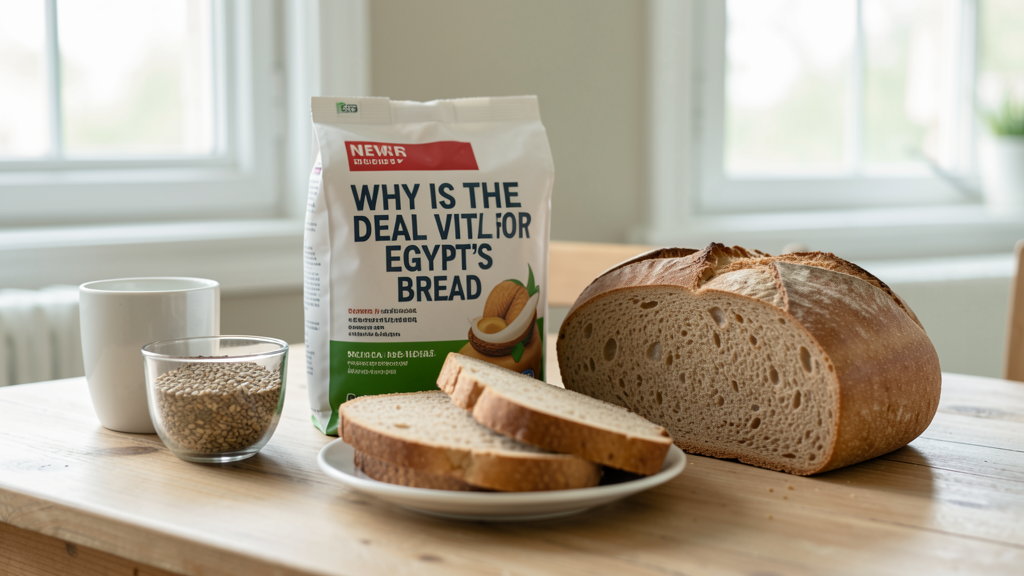
The aromatic haze of baking baladi bread usually defines the morning atmosphere in Cairo, but behind that familiar scent lies a precarious geopolitical tightrope. In February 2026, the Egyptian government remains locked in a high-stakes gamble, tethering the stability of its most critical welfare program to a fragile maritime agreement thousands of miles away. The link is direct and unforgiving: without the flow of wheat from the Black Sea, the subsidy system that keeps millions fed begins to crumble.
To understand why a shipping corridor matters more than local harvests here, one has to look at the math of Egyptian caloric intake. The country is the world’s largest wheat importer, a status driven by climate constraints and a population that has surged past 112 million. While the Nile Delta produces its own wheat, the gap between domestic production and consumption is a chasm that only imports can fill. The Black Sea Grain Deal, recently renewed for another 120 days amidst frantic diplomatic shuttle diplomacy, is not merely a trade agreement; it is the primary artery feeding Egypt’s strategic reserves.
The Baladi Bread Equation
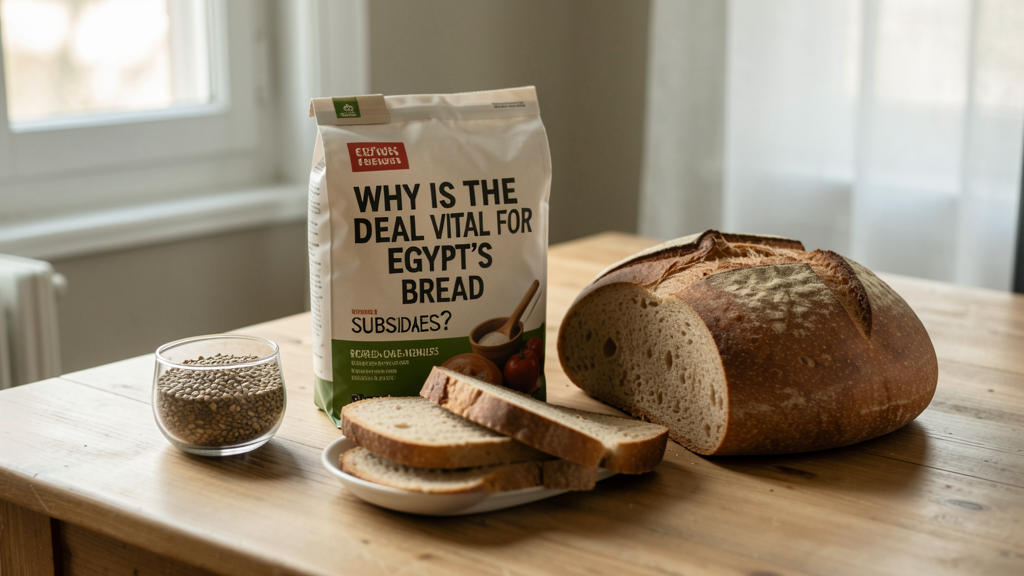
The Egyptian state spends billions annually to keep the price of a loaf of bread at a mere 0.05 Egyptian pounds. This price has been static for years, even as inflation has eroded the purchasing power of the pound in every other sector. This artificial price floor is possible because the government procures wheat from international markets at a subsidized rate and mills it into flour specifically for state-run bakeries. If the international price of wheat spikes due to supply chain interruptions, the state budget bleeds foreign reserves it can ill afford to lose.
The General Authority for Supply Commodities (GASC), the state buyer, typically conducts tenders to purchase roughly 3 to 4 million tons of wheat annually. A significant portion of this—historically over 60%—originates from Russia and Ukraine. The distinct quality of the wheat from the Black Sea region, characterized by its high protein content and gluten strength, is ideal for the specific baking properties of baladi bread. Replacing it with wheat from France or the United States often requires costly blending adjustments in the milling process.
The stakes are not merely economic. Bread subsidies are often cited by political scientists as the single most important factor in maintaining social peace. When the state fails to provide cheap bread, the street reacts violently, a lesson learned starkly in 1977 and repeated during the upheavals of the Arab Spring. Consequently, the Grain Deal is treated in Cairo with the same seriousness as a national security treaty.
The Black Sea Lifeline
The logistical reality of the 2026 grain trade is that the Black Sea remains the most efficient hub for feeding the Middle East and North Africa. Before the conflict escalated in 2022, roughly 90% of Middle Eastern wheat imports flowed through these ports. Even after four years of intermittent hostilities, the infrastructure around Odesa, Chornomorsk, and Pivdennyi remains too critical to bypass.
Russia, having consolidated its position as the dominant supplier in this theater, has leveraged this dependency. The current iteration of the Grain Deal involves complex guarantees regarding Russian ammonia exports and the reconnection of the Rossokhki agricultural bank to the SWIFT system. For Cairo, these diplomatic nuances are secondary to the raw tonnage arriving at the ports of Alexandria and Damietta.
The mechanism functions like a clockwork supply chain. Vessels registered under the Joint Coordination Centre (JCC) inspection protocols load grain, navigate through mine-infested corridors, and transit the Bosphorus. A single breakdown in this chain creates an immediate backlog. In January 2026, a temporary suspension of inspections due to a security incident in the exclusion zone delayed three vessels carrying 180,000 tons of wheat destined for Egypt. That delay forced GASC to tap into emergency strategic reserves, a move that visibly rattled commodity markets in Cairo.
The Hidden Cost of Rerouting
Critics of the heavy reliance on the Black Sea often suggest diversification as a panacea. The reality is far more brutal. Diversification is expensive, and Egypt’s foreign currency reserves, while recovering from the 2024 lows, remain volatile. Sourcing wheat from the European Union or the Americas adds an immense freight premium compared to the short hop across the Mediterranean or through the Suez Canal.
Furthermore, the quality issue persists. Milling experts in Egypt note that shifting from the 11.5% protein Russian wheat to lower-protein alternatives changes the taste and texture of the national loaf. In a culture where bread is aish (life), altering the staple is a political risk. The state bakery system is calibrated for a specific grain profile; changing the input variable requires recalibrating thousands of industrial mills, a logistical nightmare that takes months.
There is also the shadow of regional instability affecting alternative routes. The 72 hours that broke the Sudan ceasefire agreement last year demonstrated how quickly overland trade routes can become impassable. Egypt cannot rely on overland logistics from the south to shore up deficits. The maritime route from the Black Sea is not just the cheapest; it is the least vulnerable to cross-border insurgencies that have plagued the Sahel and the Horn of Africa.
A Geopolitical Balancing Act
The reliance on the Grain Deal forces Cairo into a delicate diplomatic dance. Egypt is a member of the BRICS bloc, a status it leveraged in 2025 to explore alternatives to the dollar-dominated trade system. Discussions around a BRICS currency expansion have been cited by officials as a potential buffer against future sanctions or trade wars. However, in the current 2026 crisis, transaction mechanisms are less of a hurdle than the physical availability of the grain itself.
Egypt must maintain cordial relations with Moscow to ensure the flow continues, even as it navigates pressure from Western partners regarding the conflict in Ukraine. This is not mere hypocrisy; it is survival. The Egyptian Ministry of Supply has repeatedly stated that national food security takes precedence over geopolitical alignment.
This balancing act extends to its relationship with the United Nations. The UN acts as the guarantor of the deal, a role that has become increasingly contentious. The process of how the UN appoints a new Secretary-General has recently taken on renewed significance for Cairo, as the diplomatic weight of the Secretary-General is often the only thing keeping the parties at the table when drone strikes hit port infrastructure.
The Baker’s Reality
On the ground, the impact of these high-level decisions is felt in the daily operations of bakeries like the one run by Ahmed Fathi in the Imbaba district. Fathi receives his flour quota from the government on a strict schedule. When a shipment is delayed, his quota is cut, and he must supplement with pricier, non-subsidized flour or face empty shelves.
"When the grain deal stalls, the price of a sack of flour on the black market doubles within hours," Fathi noted during a supply disruption last autumn. For consumers, this means queuing for hours or paying ten times the subsidized price for "tourist" bread. The social friction caused by these shortages is immediate and palpable.
The logistical chain connecting the Port of Constanta—where much of the Ukrainian grain is now transshipped due to direct port attacks—to the bakeries of Cairo is long and thin. It involves freight forwarders, insurance companies charging war risk premiums, and customs officials working overtime to clear shipments before they spoil. Every node in this chain adds a cost that the Egyptian government must absorb to keep the price at 0.05 pounds.
Looking ahead, the vulnerability of this system is unlikely to change. Climate change is likely to reduce domestic yields further, increasing import dependency. The Grain Deal, for all its flaws and frequent suspensions, remains the only viable mechanism to bridge the gap between the 9 million tons of wheat Egypt consumes and the roughly 4.5 million tons it produces.
The true danger lies not in the collapse of the deal itself, but in the unpredictability of its renewals. The uncertainty creates market volatility that inflates costs even before a single ship is halted. For the Egyptian leadership, the goal is no longer just about securing food, but about stabilizing the diplomatic architecture that keeps the cargo ships moving. The next 120 days will determine whether Cairo can continue to bake bread at a price its population can afford, or if the economic pressures of a distant war will finally force a painful hike in the cost of the national loaf.
Read next
Khartoum’s Silent Signals: How 72 Hours of Radio Silence Dismantled the Sudan Truce
An exclusive breakdown of the specific military miscommunications and tactical maneuvers in Khartoum that turned a fragile ceasefire into a full-scale urban combat zone.
The 2026 Race: How the UN Security Council Selects the Next Secretary-General
A technical dissection of the straw polls and veto power determining the successor to António Guterres in this year's high-stakes diplomatic cycle.