
Beyond Lithium: 3 Battery Prototypes Entering Production in 2026
We analyze three specific chemistries moving from controlled lab environments to factory floors this year, determining which offers a viable alternative to lithium-ion dominance.

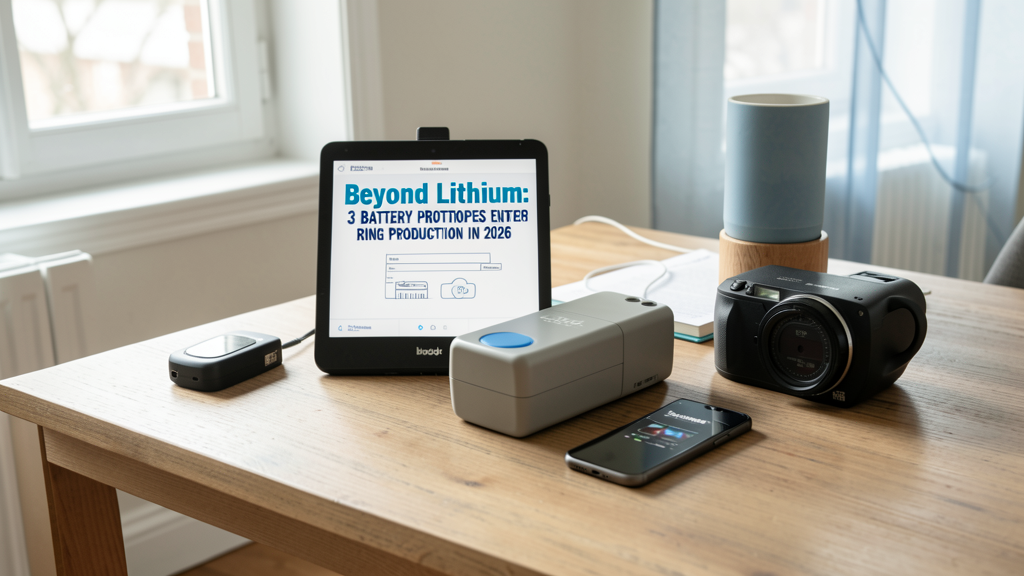
The electric vehicle market has spent the last decade riding a single horse: lithium-ion. While the chemistry has served us well, pushing energy densities past the 270 Wh/kg mark has introduced diminishing returns and dangerous volatility. In 2026, we are finally witnessing a pivot. The "post-lithium" era is no longer a theoretical concept confined to academic papers; it is entering the pre-production phase.
For the consumer and the industry alike, the stakes are existential. The price of lithium carbonate stabilized this year, but the supply chain remains fragile. The question is no longer if we can replace lithium, but which contender will scale first. We are looking at three distinct technologies—sodium-ion, sulfide-based solid-state, and lithium-sulfur—that have graduated from the lab and are currently piloting assembly lines. Each targets a different flaw in the current paradigm, yet none offers a perfect solution.
The Sodium-Ion Pivot: Cost Over Range for Urban Fleets
Sodium-ion technology has historically been dismissed as a heavy, low-density solution unfit for modern transport. That prejudice is eroding fast. The primary selling point here is not performance, but economics and material abundance. Sodium is chemically similar to lithium but available in virtually unlimited quantities from seawater or salt mines. In 2026, we are seeing the first commercial deployment of hard carbon anode sodium batteries in budget-oriented EVs and energy storage systems.
The standout example this year is the rollout of the new CityMaster EV bus fleet in Southeast Asia. Utilizing cells produced by the scaled-up joint venture between CATL and local manufacturers, these buses rely on a sodium-ion chemistry boasting 160 Wh/kg. This figure is roughly 30% lower than standard lithium iron phosphate (LFP) batteries, but the manufacturing costs are down by nearly 40%.
However, the trade-offs are specific and substantial. Sodium-ion cells exhibit a steeper voltage drop under heavy load, and their round-trip efficiency plummets in freezing temperatures. While they charge exceptionally fast—reaching 80% in under 15 minutes—the energy density means a heavier pack for the same range. For the average commuter driving 50 kilometers a day, this is irrelevant. For a long-haul truck, it is a dealbreaker.
We must also scrutinize the environmental claims. While mining is less intensive, the production of hard carbon anodes often involves biomass processing that can emit volatile organic compounds if not strictly regulated. This brings us to the broader issue of industrial chemical management. As the UK tightens its grip on pollutants, understanding the chemistry of these new cells is becoming as important as their performance. The Science Behind the UK's New 'Forever Chemicals' Ban highlights how the battery industry is having to adapt its waste protocols to comply with new environmental standards.
Can Sulfide Solid-State Batteries Finally Scale?
Solid-state batteries have been the "next big thing" for so long that skepticism is warranted. The promise is seductive: replace the flammable liquid electrolyte with a solid one, and you instantly solve the safety issues while boosting energy density past 400 Wh/kg. In early 2026, Toyota and its subsidiary partners began the trial production of sulfide-based solid-state batteries in a dedicated pilot plant in Aichi, Japan.
Why sulfide? Oxide-based solid electrolytes are brittle and hard to process, while polymer versions suffer from low conductivity. Sulfides offer ionic conductivity comparable to liquids, allowing for power delivery that rivals or exceeds current supercars. The prototypes running this year claim a range of 1,200 kilometers on a single charge, with charging times reduced to 10 minutes.
But the engineering hurdles remain brutal. Sulfide electrolytes are notoriously sensitive to moisture. When exposed to humid air, they release hydrogen sulfide gas—toxic and corrosive. This requires "dry room" manufacturing environments that are significantly more expensive to build and maintain than current lithium gigafactories. This creates a tension between the material's performance and its manufacturability.
Furthermore, the physical stress on the solid interface during charging cycles—where the cathode and anode expand and contract at different rates—can cause microscopic cracks. This is a materials science nightmare reminiscent of the early days of foldable screens vs. durability debates. Just as screens had to balance flexibility with resilience, solid-state layers must maintain ionic contact without fracturing. If the 2026 pilot runs can solve the delamination issue at scale, we will see a premium EV revolution by 2027. If not, this technology remains a high-cost curiosity for hypercars.
Lithium-Sulfur’s Last Stand Against Density Limits
While sodium-ion attacks the cost problem and solid-state attacks the safety problem, lithium-sulfur (Li-S) is the pure play for maximum energy density. Theoretically, Li-S offers a specific energy five times higher than lithium-ion. In 2026, we are seeing a resurgence of interest not for passenger cars, but for aviation and heavy-duty logistics where weight is the primary enemy.
The specific breakthrough this year involves a new "carbon-sulfur nanocomposite" cathode that traps the polysulfides usually responsible for the "shuttle effect"—a phenomenon where active material dissolves in the electrolyte, causing rapid capacity fade. A Boston-based startup, recently acquired by a major aerospace contractor, has begun shipping prototype packs for drone testing. These cells are hitting 500 Wh/kg in real-world conditions, a figure that would make any lithium-ion engineer blush.
The caveat is the cycle life. Even with the new nanocomposite, these prototypes are rated for only 300 to 500 cycles before capacity drops below 80%. For a passenger vehicle with a 10-year lifespan, this is unacceptable. For a commercial drone or a short-range electric aircraft that replaces batteries daily or weekly, it is a viable trade-off.
We must also be wary of the hype cycle. Advanced battery announcements are prone to exaggeration, often blurring the lines between lab-bench results and commercially viable products. It is crucial to look past the press releases and examine the independent verification data. How to Verify if a Viral Video is AI-Generated might seem unrelated, but the methodology applies here: trust only traceable, verified data sources, not slick marketing renders. The density numbers for Li-S are impressive, but if the battery requires a specialized heating system to keep the sulfur active, the net energy gain evaporates.
The Fragmentation of Energy Storage
The narrative that a single "killer" technology will unseat lithium-ion is flawed. The year 2026 is proving that the future of energy storage is not a monolith, but a fractured ecosystem tailored to specific use cases. We are moving toward a world where your urban commuter runs on cheap sodium, your long-distance luxury sedan utilizes a solid-state core, and the cargo planes overhead rely on lightweight lithium-sulfur packs.
The defining factor for the next generation of EVs will not be which chemistry has the highest density in a vacuum, but which balances manufacturing scalability with total cost of ownership. Solid-state offers the best user experience but faces the steepest manufacturing cliffs. Sodium-ion offers the easiest path to mass adoption but cannot fulfill the range requirements of all markets. Lithium-sulfur offers unmatched density but is constrained by durability.
Investors and consumers should stop looking for a silver bullet. The transition we are witnessing this year is about specialization. As these pilot lines ramp up through the summer and into Q4, the data we gather on defect rates and thermal stability will reveal the true winners. For now, lithium-ion remains the king, but the cracks in its armor are widening, and the successors are already knocking at the gate.
Read next

Exposing the Synthetics: A Forensic Approach to 2026 Deepfakes
Technical forensic techniques to identify pixel-level and temporal artifacts in the current generation of AI-generated videos.

The Chemistry of Permanence: Why the UK Finally Banned PFAS
The UK's 2026 ban on PFAS is rooted in the unique carbon-fluorine bond that prevents natural decay, leading to irreversible bioaccumulation in human tissue.