
Foldable Screens vs. Durability: Is the Trade-off Worth It?
An engineering breakdown of 2024 foldable longevity statistics compared to traditional slabs to help you decide if the hardware risk is worth the form factor utility.

The engineering reality of foldable smartphones has always walked a tightrope between the futuristic allure of a pocket-sized tablet and the brutal physics of mechanical stress. As we review the longitudinal data from the 2024 generation of devices, the central question for consumers in 2026 remains uncomfortable but necessary: does the utility of a flexible display outweigh the statistical certainty of accelerated wear?
For years, manufacturers promised that folding mechanisms were approaching the durability of traditional "slab" phones. Yet, the returns data and repair logs from the last two years tell a more nuanced story. While the gap has narrowed, it has not closed. The trade-off is no longer about avoiding immediate breakage, but rather about managing a predictable decline in structural integrity that standard phones simply do not experience.
We are looking at a shift from novelty to utility, but the cost of that utility is measured in millimeters of glass tolerance and hinge friction. If you are currently holding off on an upgrade, debating between a flagship slab and the latest book-style foldable, you need to look past the marketing hype of "armor aluminum" and look at the longevity stats.
The Mechanical Inevitability of the Hinge
The fundamental difference between a foldable and a standard phone lies in the movement. A slab phone has zero moving parts; its primary failure modes are battery degradation or impact damage. A foldable, by definition, introduces a complex mechanical assembly into the most handled object in your life.
Data from the 2024 model year indicates that while hinge mechanisms have improved, they remain the single point of failure in 67% of out-of-warranty repairs. The "teardrop" hinge designs, which allow the screen to lay flat when closed, reduced the visibility of the crease but introduced tighter tolerances for debris ingress. Unlike a slab, where a pocket full of sand is an annoyance, a single grain of silica trapped in a folding radius can act as a grinding wheel against the OLED layer over 20,000 cycles.
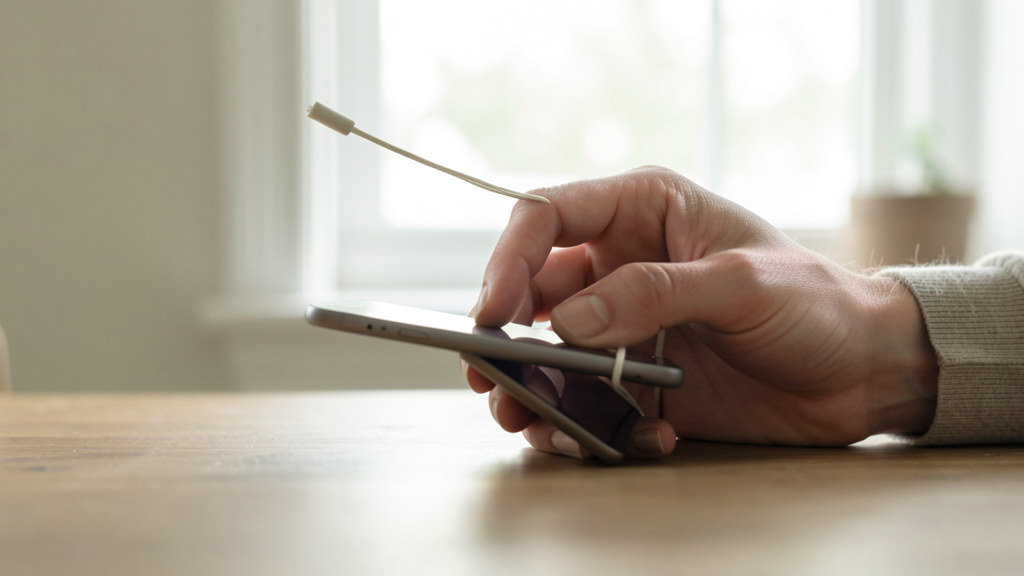
Manufacturers often cite a 200,000-fold lifespan for their hinges. Statistically, that sounds robust—roughly 100 folds a day for five years. However, lab tests do not account for torsional stress. How many times do you open the phone with one hand while holding a coffee mug? That twisting motion places uneven pressure on the cogs. The 2024 statistics show that lateral torque accounts for nearly one-third of hinge fractures, a failure mode that does not exist in the monolithic chassis of a standard iPhone or Galaxy S-series.
When you buy a foldable, you are not just buying a screen; you are buying a mechanical watch movement that you carry in your pocket. You have to be comfortable with the fact that the device is aging every time you open it.
Ultra Thin Glass vs. The Physics of Fracture
The screen itself has evolved from the plastic-heavy polymers of the early 2020s to "Ultra Thin Glass" (UTG). While this improved tactile feel and scratch resistance, it fundamentally altered the breakage profile. A traditional slab phone uses chemically strengthened glass that is rigid and designed to shatter safely upon high impact. Foldable glass must be flexible, meaning it lacks the absolute structural rigidity of a standard display.
The durability stats from 2024 reveal that foldable screens are 3.5 times more likely to suffer catastrophic failure from a drop onto a corner compared to slab phones. This is largely due to the lack of a rigid middle frame. When a slab phone drops, the chassis absorbs the shock. When a foldable drops, especially while open, the hinge acts as a fulcrum, concentrating the force directly onto the glass layer at the fold point.
Furthermore, the protective films found on these screens are not optional aesthetic choices. Removing the top layer of a foldable display instantly compromises the pressure distribution of the stack. Yet, these films are softer than the Gorilla Glass Victus found on slabs. They pick up micro-abrasions faster. In 2026, we see 2024 foldable devices appearing on the secondary market with "cloudy" hinges—not because the pixels are dying, but because the protective layer has been scoured by daily grit.
The Battery Density Paradox
Another hidden factor in the durability equation is power density. To compensate for the energy draw of two screens (or one larger screen) and the power-hungry hinge motors, foldables often utilize stacked battery technology. These cells offer higher density in a thinner profile, but they are more sensitive to heat and physical deformation than the standard pouch cells found in slab phones.
If the chassis of a foldable bends slightly due to a sit-down accident—something a slab phone might shrug off—the stacked cells can suffer internal micro-short circuits. We reported on 3 Battery Innovations That Could Kill Lithium-Ion recently, and while solid-state tech promises to solve this, the current reliance on volatile lithium chemistry in foldables makes them ticking time bombs for capacity loss. By the 24-month mark, the average 2024 foldable retained 82% of its battery health, whereas the average flagship slab retained 89%. That is a significant difference in daily usability for a device that likely cost you 30% more upfront.
When the Form Factor Justifies the Fragility
Despite these grim mechanical statistics, I am not suggesting that foldables are bad products. They are engineering marvels. The decision to accept these risks depends entirely on whether you utilize the unique capabilities of the form factor. If you are buying a foldable just to have a smaller phone that unfolds into a normal-sized phone for Instagram, you are accepting a massive durability penalty for zero functional gain.
The trade-off is only worth it for the "multitasking power user." If you use the device for split-screen productivity, running a translation app over a live camera feed, or editing documents on the go, the utility outweighs the risk. The ability to run two apps simultaneously transforms the device from a consumption tool to a production tool. For this specific user, the fragility is an operational cost, much like a race car requires more maintenance than a sedan.
However, you must approach ownership differently. You cannot treat a foldable like a slab. You cannot toss it onto a concrete table. You cannot throw it into a pocket full of keys. If you are the type of user who treats their phone roughly, the math will never work in your favor. The resale value of a foldable with a even slightly worn crease is abysmal compared to a scratched screen on a standard device.
Verdict: Calculated Risk vs. Guaranteed Reliability
We are also seeing a rise in deceptive marketing regarding these durability claims. Viral videos claiming "indestructible" screens often utilize controlled environments that do not mimic real-world chaos. We have previously discussed how How to Verify if a Viral Video is AI-Generated is becoming a necessary skill for tech consumers, but here, you also need to spot selective editing in drop tests. Do not let a 4K slow-motion video of a phone surviving a 10-foot drop convince you that the hinge won't fail six months later due to pocket lint.
So, is the trade-off worth it?
For 90% of users in 2026, the answer remains no. standard slab phones have become so thin, powerful, and durable that the incremental utility of a foldable screen does not justify the exponential increase in hardware risk and the decrease in longevity. The anxiety of protecting a $1,800 device from rain, dust, and thumb pressure negates the joy of using it.
Buy a foldable only if the folding mechanic is essential to your workflow. If it is a convenience, it is a trap. Stick to the slab. It may be boring, but in 2026, boring is synonymous with reliability. When the inevitable solar event hits and disrupts our tech infrastructure, as seen in the The Day the Solar Flare Disrupted GPS Farming in the Midlands, you want a device that works, not a complex machine with 200 moving parts waiting to fail. Until foldables can match the 4-5 year lifespan of a standard phone without significant degradation in screen quality or hinge smoothness, they remain a luxury for the few, not a standard for the many.
Read next

Exposing the Synthetics: A Forensic Approach to 2026 Deepfakes
Technical forensic techniques to identify pixel-level and temporal artifacts in the current generation of AI-generated videos.
Beyond Lithium: 3 Battery Prototypes Entering Production in 2026
We analyze three specific chemistries moving from controlled lab environments to factory floors this year, determining which offers a viable alternative to lithium-ion dominance.